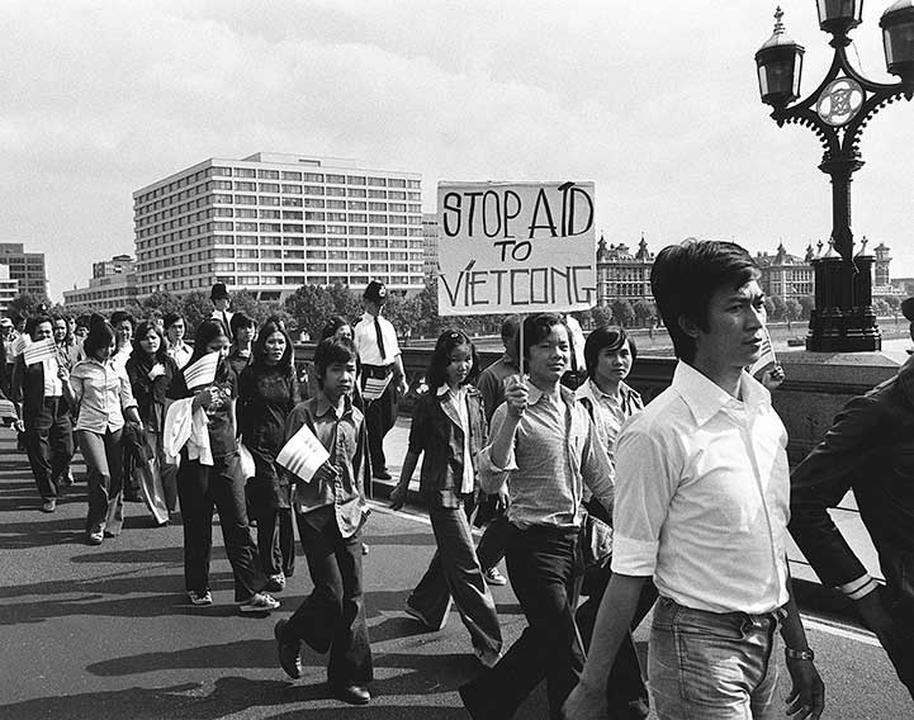
Although Britain had actually been accepting small numbers of refugees from South Vietnam since the mid-70s (900 in 1975 for example) in the British public conscious the term “Vietnamese refugee” is synonymous with the term “Boat People” and the relatively large number of refugees accepted from Vietnam in the last year of the decade.
After the victory of the North Vietnamese army and the reunification Vietnam, the internal policies of the communist government lead to a great number of Vietnamese fleeing their country in small, often rickety and overcrowded, fishing boats.
As a significant proportion of the “Boat People” (as they uniformly became known in the Western media) were ethnically Chinese, many of the boats set sail for the areas of Asia with well-established Chinese communities, such as Singapore and, particularly, Hong Kong.
The tens of thousands of refugees who arrived in the islands were put up in rudimentary refugee camps, but their sheer number was causing a significant problem for the Hong Kong authorities, and, by extension, the British government.
By 1979 the situation had come to a head: the boat people already in the camps on Hong Kong’s crowded islands numbered over 32,000, the conditions in many of the camps were terrible and, perhaps most importantly, they continued to arrive. Initially, the UK agreed to take 1,500 refugees who had been rescued at sea, followed by a further 1,400.
As the number of people living in the camps continued to rise, however, the Britain, as the nation responsible for administering Hong Kong, came under increasing pressure from the International Community to find a solution to the crisis in the camps.
Finally, in July 1979, at the conference in Geneva organized to discuss the refugee crisis, the British government agreed to take a further 10,000 Vietnamese refugees from the camps in Hong Kong.
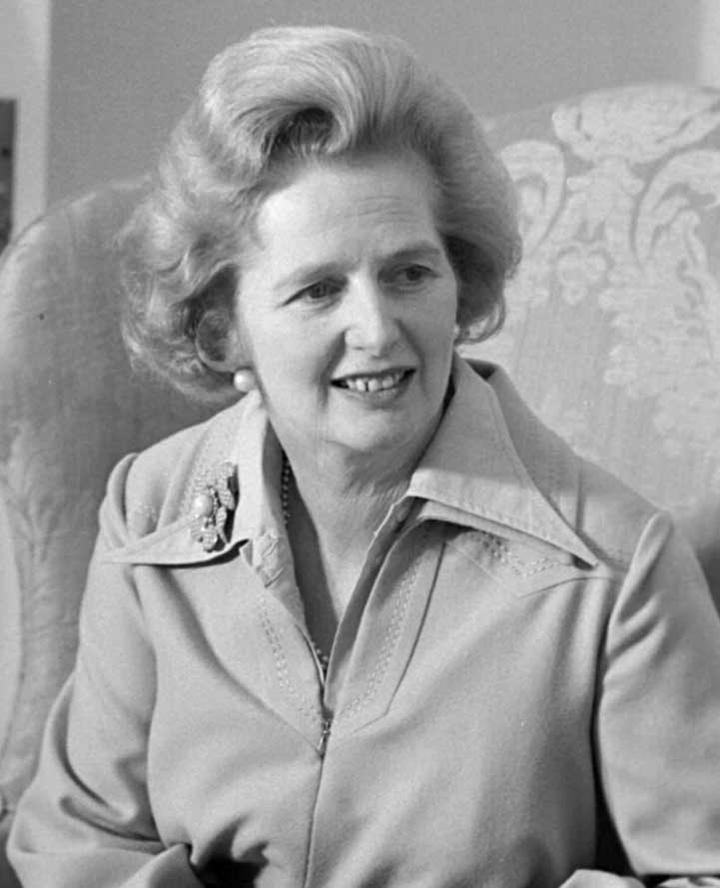
Some Vietnamese refugees have hailed Thatcher as a champion of the Vietnamese people for this decision. However, recently released Downing Street papers reveal that Thatcher was reluctant to allow the ‘boat people’ into the UK, partly out of a fear that British people would react badly to so many council houses being granted to non-British nationals and partly due to a concern that the new immigrants, as Asians, would not integrate well. Thatcher said refugees from Poland, Zimbabwe and Hungary would be preferable as they stood a better chance of assimilating.
So keen was Thatcher to avoid an influx of Vietnamese refugees, that she floated the idea of jointly buying with Australia a Philippine island for the ‘boat people’. This idea was blocked by Lee Kuan Yew of Singapore due his concerns that it would turn into a rival entrepreneurial city.
Ultimately it was Thatcher’s colleagues, Lord Carrington (foreign secretary) and William Whitelaw (home secretary) who persuaded a reluctant Thatcher to accept 10,000 refugees. For his part, Whitelaw argued that “it is necessary that we should have a positive and defensible policy towards refugees from a brutal communist tyranny.”
Although Thatcher compromised over the acceptance of Vietnamese refugees, she maintained a tough stance with Vietnam on the issue of the continued exodus of ‘boat people’. In 1979 she announced that she would be stopping all British aid to Vietnam, the bulk of which would have been £4 million worth of food.
Thatcher believed that the only body that could prevent the number of refugees in the Hong Kong camps returning to their previous level was the Vietnamese government, which was widely believed to be pursuing policies aimed at forcing ‘undesirable’ elements out of the country.
The British government had initially attempted to negotiate directly with Hanoi to bring about an end to these policies, and when this showed no sign of progress tried to persuade the Soviet government to use its considerable influence to the same effect. Once this tactic failed to bear fruit, the Prime Minister made her announcement, complete with a strong denouncement of the role played in the refugee crisis by both the Vietnamese and Soviet governments.
Given that many of the millions of internal refugees in Vietnam depended on foreign aid for all of their basic needs, this decision was a particularly controversial one; even more so considering Thatcher’s refusal, on purely economic grounds, to halt the construction of three merchant vessels for the Vietnamese Government then being built in British ship yards. Matters were made worse for Vietnamese people when the EEC, influenced by Thatcher’s stand, halted the shipment of 100,000 tons of food to Vietnam, which included 15,000 tons of skimmed milk for young children.